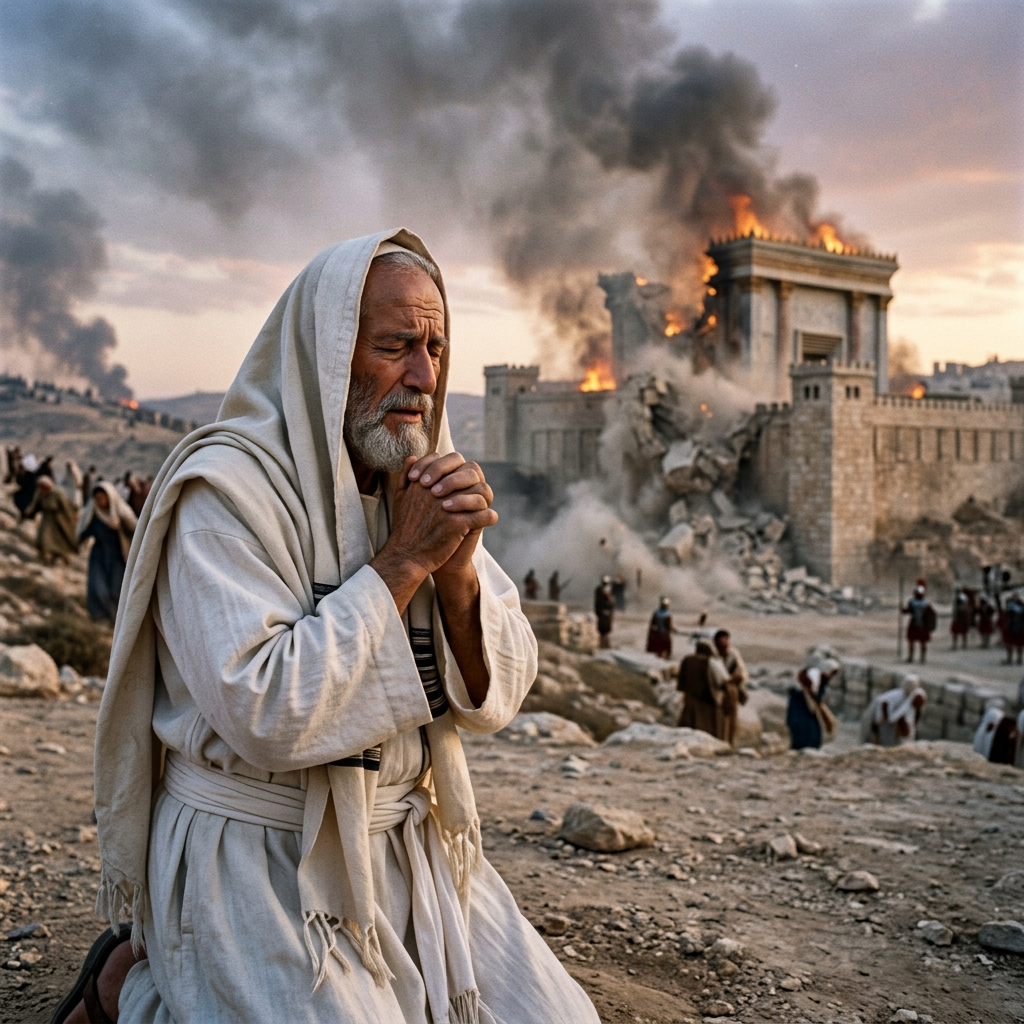
There is a sobering weight that rests upon the account of Eli—a priest, a judge, a man entrusted with sacred responsibility—yet one who allowed the quiet drift of compromise to speak louder than the voice of obedience.
In the book of 1 Samuel, we are given a window into a house that stood near the altar, yet slowly moved away from the heart of God. Eli’s sons, Hophni and Phinehas, were not merely flawed—they were defiant. Scripture does not soften it:
“Now the sons of Eli were sons of Belial; they knew not the Lord.” (1 Samuel 2:12)
Though they served in priestly roles, their lives contradicted the holiness of the office. They mishandled offerings, exploited the people, and defiled sacred things (1 Samuel 2:13–17, 22). Their actions were not hidden from Eli. He heard. He knew. He even spoke words of correction:
“Nay, my sons; for it is no good report that I hear: ye make the Lord’s people to transgress.” (1 Samuel 2:24)
Yet correction without consequence became empty sound. His rebuke lacked the weight of righteous action. And here is where the line was crossed—not in ignorance, but in hesitation.
The Lord sent a prophetic warning, piercing through the stillness of Eli’s house:
“Wherefore kick ye at my sacrifice and at mine offering… and honourest thy sons above me?” (1 Samuel 2:29)
This is the turning point. The charge was not merely against the sons—it was against Eli himself. He had honored his sons above God. He chose preservation of relationship over obedience to divine command. He allowed fleshly attachment to override holy responsibility.
And the judgment came, not as a sudden storm without warning, but as a declared decree:
“Behold, the days come, that I will cut off thine arm… and this shall be a sign unto thee… in one day they shall die both of them.” (1 Samuel 2:31, 34)
Later confirmed again through the young prophet Samuel:
“For I have told him that I will judge his house for ever for the iniquity which he knoweth; because his sons made themselves vile, and he restrained them not.” (1 Samuel 3:13)
That final phrase echoes like a bell through generations: “he restrained them not.”
This was not a failure of awareness—it was a failure of action.
When the day of fulfillment came, it unfolded exactly as spoken. Israel fell in battle, the ark was taken, and both sons died in one day (1 Samuel 4:10–11). When Eli heard the news, especially of the ark of God, he fell backward, and his life ended (1 Samuel 4:18). The house that once stood in sacred service collapsed under the weight of neglected obedience.
There is a deep lesson carved into this account:
God does not overlook when His order is compromised for personal attachment. Love that refuses to align with truth becomes indulgence. Leadership without correction becomes agreement. And silence in the face of wrongdoing becomes participation.
Eli’s story is not merely about judgment—it is about misplaced priority.
The Lord seeks those who will honor Him above all—above comfort, above relationships, above the fear of confrontation. For the call to serve Him has always required a steady hand, a discerning heart, and the courage to act when His will is made known.
As it is written:
“Them that honour me I will honour, and they that despise me shall be lightly esteemed.” (1 Samuel 2:30)
The path is clear, though not always easy. To walk with God is to choose Him fully—not partially, not when convenient—but with a devotion that does not bend when tested.
And in that unwavering alignment, there is life, peace, and a legacy that stands unshaken.
Leave a Reply