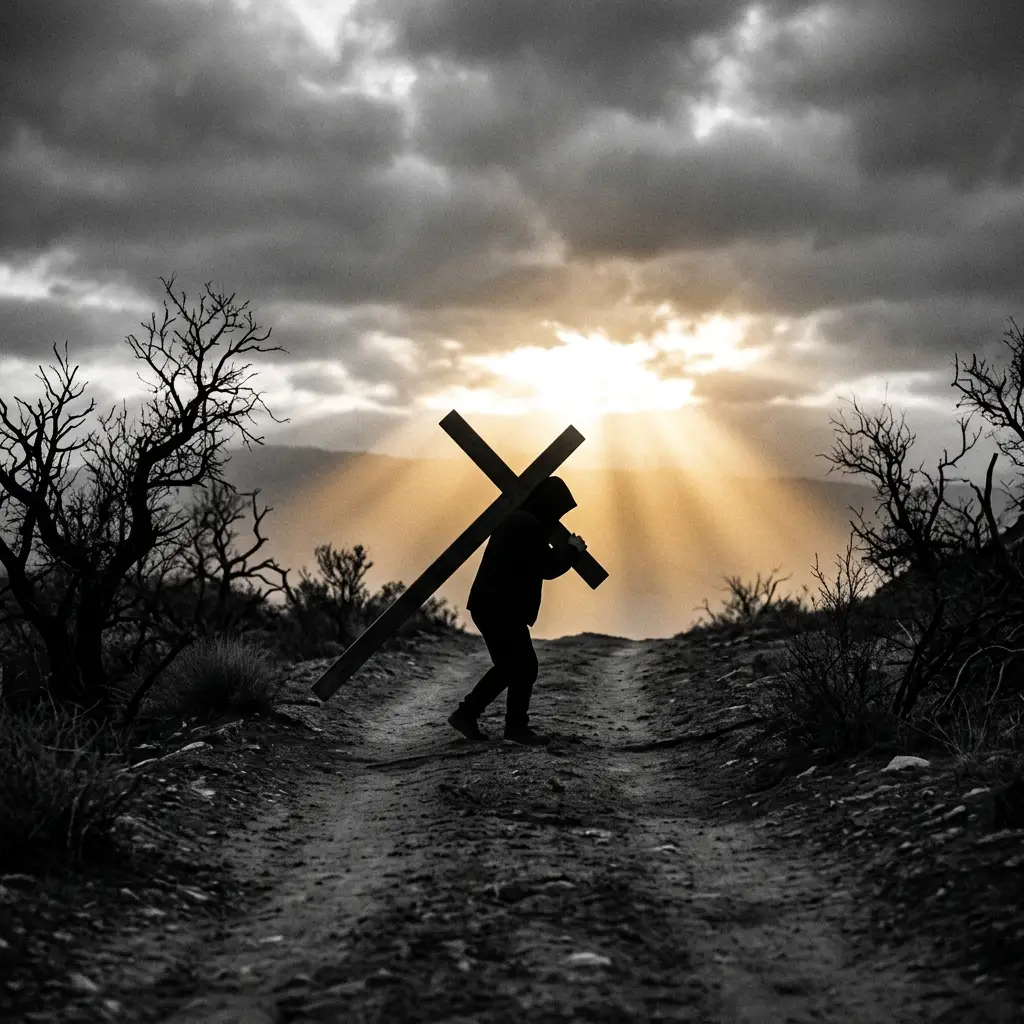
There is a sobering reality that moves quietly through the hearts of many who profess the name of Jesus Christ, yet resist the very life He calls them into. It is a strange contradiction—to reach for the crown while rejecting the cross, to desire the promise while denying the process, to speak His name while silencing His authority in one’s daily walk. The Scriptures do not leave this matter hidden in shadows, but bring it forth into the piercing light of truth.
The Apostle Paul spoke with a grief that still echoes through generations, declaring, “For many walk, of whom I have told you often, and now tell you even weeping, that they are the enemies of the cross of Christ” (Philippians 3:18). These were not strangers to religion, nor outsiders to the language of faith. They were among the visible body, moving in proximity to truth, yet untouched by its transforming power. Their lives bore witness not to surrender, but to self-preservation. Not to holiness, but to appetite. For it is written, “Whose end is destruction, whose God is their belly, and whose glory is in their shame, who mind earthly things” (Philippians 3:19).
The cross is not an ornament to be worn—it is an altar upon which the flesh must die. Jesus Himself spoke plainly, leaving no room for softened interpretations: “If any man will come after me, let him deny himself, and take up his cross daily, and follow me” (Luke 9:23). Yet many seek to follow without denying, to receive without relinquishing, to be filled without being emptied. They desire the oil, but flee the crushing. They long for resurrection life, but resist the death that precedes it.
There is a form of godliness that has learned how to speak the language of faith while remaining untouched by its fire. The Word warns, “Having a form of godliness, but denying the power thereof: from such turn away” (2 Timothy 3:5). Power is not found in confession alone, but in transformation. It is not revealed in words only, but in a life that bows in obedience to the will of God. Where there is no submission, there is no true Lordship. And where Christ is not Lord, He is not truly received as Savior.
Jesus spoke with piercing clarity when He said, “Not every one that saith unto me, Lord, Lord, shall enter into the kingdom of heaven; but he that doeth the will of my Father which is in heaven” (Matthew 7:21). These words dismantle the illusion that verbal allegiance is enough. The Kingdom is not inherited through empty declarations, but through a life aligned with the will of the Father. A tree is known by its fruit, and where the fruit of righteousness is absent, the root must be questioned. As it is written, “Wherefore by their fruits ye shall know them” (Matthew 7:20).
To desire Christ without the cross is to desire a version of Him that does not exist. For the cross is not separate from Him—it is the very pathway through which redemption flows. To reject the cross is to reject the cost of discipleship. And the cost is not hidden. It is written, “And whosoever doth not bear his cross, and come after me, cannot be my disciple” (Luke 14:27).
There is a pressing that produces oil, a breaking that releases fragrance, a surrender that invites glory. The ones who walk in truth are not those who avoid the process, but those who embrace it with reverence and holy fear. For they understand that obedience is better than sacrifice, and surrender is the doorway into divine intimacy. As the Word declares, “If ye love me, keep my commandments” (John 14:15).
The call is not to a surface-level association, but to a life hidden in Christ. Not to convenience, but to consecration. Not to comfort, but to transformation. The path is narrow, and few there be that find it, “Because strait is the gate, and narrow is the way, which leadeth unto life, and few there be that find it” (Matthew 7:14).
Yet even in this sobering truth, there is mercy extended. For the same voice that warns also calls, the same hand that convicts also invites. The cross still stands—not only as a symbol of suffering, but as an open door into life eternal. And those who choose to lay down their will, to crucify the flesh, and to walk in obedience, will find that what awaits them is far greater than what they surrendered.
For in losing their life, they will find it. “For whosoever will save his life shall lose it: but whosoever will lose his life for my sake, the same shall save it” (Luke 9:24).


Leave a Reply