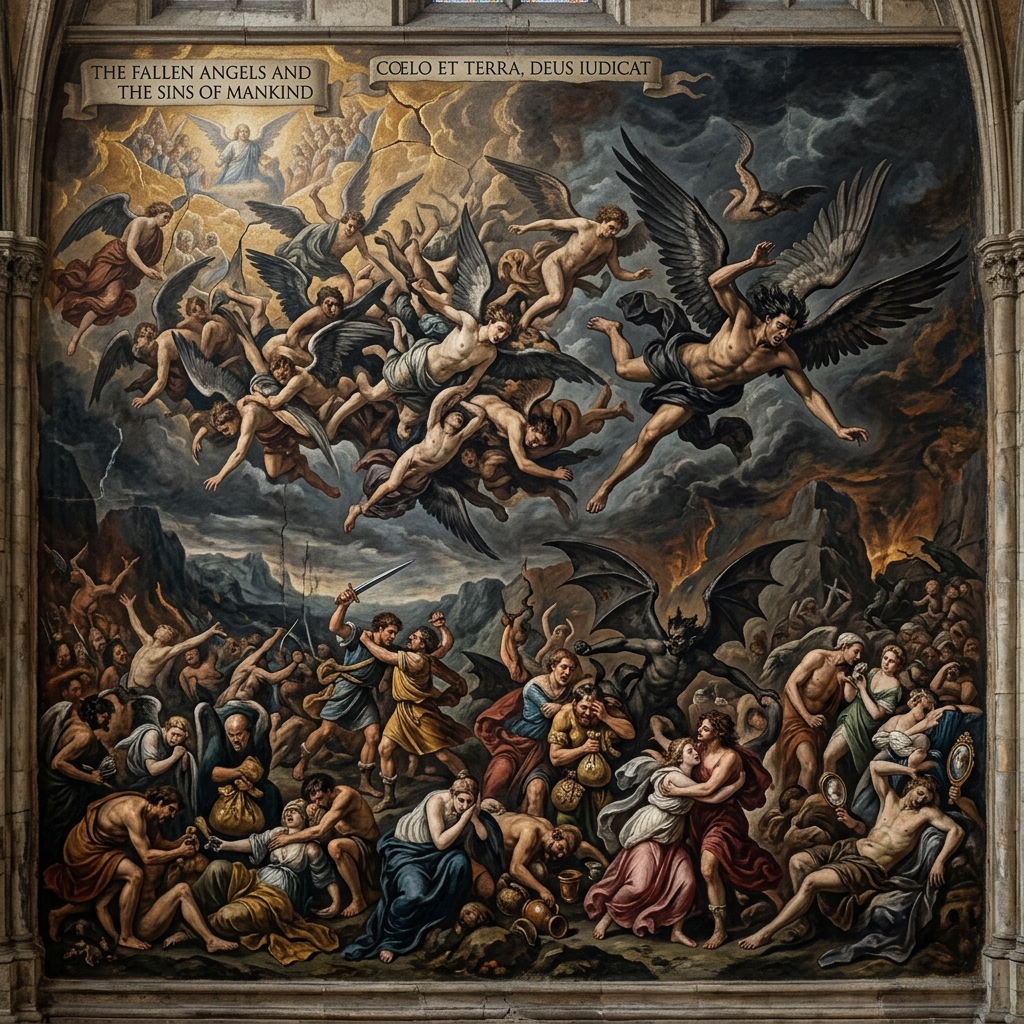
Understanding the Spiritual Dimension of Human Wickedness
It is my sincere desire that every child of God would learn what the Word of God teaches concerning the wickedness of every form of rebellion against the Lord God and the destruction that rebellion ultimately brings with it. Rebellion against God is never something to be taken lightly. Throughout Scripture, we see that whenever mankind knowingly turns away from the commandments, authority, righteousness, and truth of God, there are consequences that can reach far beyond the initial act of disobedience.
My purpose in addressing this subject is not to create fear, fascination, or unhealthy obsession with the kingdom of darkness. Rather, it is to encourage the people of God to become spiritually discerning and firmly grounded in the truth of Scripture. We must understand that there is a spiritual dimension to the wickedness we see operating throughout humanity, while also recognizing that every individual remains responsible before God for the choices they make.
The Word of God gives us a sobering picture of rebellion, deception, sin, spiritual wickedness, judgment, repentance, and redemption. It also reveals the role that Satan and fallen spiritual beings have played in humanity’s temptation and rebellion against God.
Throughout human history, mankind has struggled with the reality of sin. Violence, hatred, greed, sexual immorality, deception, pride, oppression, murder, corruption, and rebellion against God have appeared in generation after generation. Although societies, governments, cultures, and circumstances change, the fundamental problem of the human heart remains.
The Bible does not present mankind’s wickedness as merely a social problem. Scripture reveals that there is also a spiritual dimension to the conflict between good and evil.
Behind humanity’s rebellion against God stands a spiritual adversary who seeks to deceive, tempt, influence, and ultimately separate people from their Creator.
Yet we must understand something extremely important: the existence of Satan and fallen angels does not remove mankind’s responsibility for sin.
Human beings make choices.
The fallen spiritual realm may tempt, deceive, influence, and encourage rebellion, but Scripture consistently calls mankind to repentance and obedience to God.
THE ORIGINAL SOURCE OF REBELLION
The biblical story of evil begins with rebellion against God.
Isaiah 14:12–15 and Ezekiel 28:12–17 are traditionally understood within Christian interpretation as passages that, while addressing earthly kings in their immediate context, also contain imagery associated with pride, rebellion, and the downfall of a powerful spiritual being. Revelation 12:7–9 explicitly identifies the dragon as “that old serpent,” called the Devil and Satan, who deceives the whole world.
Jesus Himself described Satan as a murderer and a liar, saying that he is the father of lies (John 8:44).
The picture Scripture gives us is therefore one of a spiritual adversary who has rejected God’s authority and works against the purposes of God.
Satan’s rebellion was not merely a disagreement with God.
It was an attempted rejection of divine authority.
Pride became a doorway to rebellion.
And rebellion against God ultimately produces destruction.
THE FALLEN ANGELS AND THE SPREAD OF REBELLION
The Bible also speaks of angels who sinned.
Second Peter 2:4 declares that God did not spare angels when they sinned but cast them into chains of gloomy darkness, while Jude 6 speaks of angels who “did not stay within their own position of authority.”
Revelation 12:4 uses symbolic imagery of a dragon sweeping away a third of the stars of heaven with its tail. Later in the same chapter, Michael and his angels battle against the dragon and his angels.
Together, these passages contribute to the biblical understanding of a spiritual rebellion involving Satan and other fallen spiritual beings.
Their rebellion demonstrates a sobering reality:
Even beings who experienced the glory and power of God’s created order were capable of choosing rebellion.
The spiritual realm is therefore not presented in Scripture as something imaginary or irrelevant. It is part of the larger biblical narrative concerning God’s creation, human history, judgment, redemption, and the ultimate defeat of evil.
THE SERPENT IN THE GARDEN
One of the most important moments in human history occurs in Genesis 3.
The serpent approaches Eve and begins by questioning God’s Word.
“Yea, hath God said…?”
That question is more than a conversation.
It represents the beginning of a strategy that continues throughout human history:
Question God’s Word.
Distort God’s Word.
Distrust God’s Word.
Disobey God’s Word.
The serpent presented the forbidden fruit as something desirable and suggested that disobedience would produce enlightenment rather than death.
Genesis 3:6 records that Eve saw that the tree was good for food, pleasant to the eyes, and desirable to make one wise.
She took the fruit.
Adam also ate.
Sin entered human experience through disobedience.
But notice something important: Satan did not physically force Adam and Eve to eat.
They chose.
This distinction matters.
SATAN CAN TEMPT, BUT MANKIND IS STILL RESPONSIBLE
One of the greatest mistakes people can make when discussing spiritual warfare is blaming every sinful action entirely on Satan.
Scripture does not permit us to do that.
James 1:14–15 teaches that a person is tempted when he is drawn away by his own desires. Those desires can give birth to sin, and sin ultimately produces death.
This means there are two realities operating simultaneously.
There is external spiritual temptation, and there is internal human responsibility.
Satan can whisper.
Mankind can listen.
The enemy can deceive.
Mankind can believe the deception.
Dark spiritual powers can encourage rebellion.
Human beings can still choose obedience.
This is why the call to repentance remains so central throughout Scripture.
THE HUMAN HEART BECAME CORRUPTED
After the fall, sin spread throughout the human family.
Genesis 6:5 gives one of the Bible’s most sobering descriptions of humanity before the Flood:
“Every imagination of the thoughts of his heart was only evil continually.”
Human wickedness had become widespread.
Violence filled the earth.
Corruption had become normalized.
The problem was not simply what people did.
The problem was what had developed within them.
The human heart had become corrupted by sin.
This same pattern can be observed throughout history.
When people repeatedly reject God’s righteousness, sinful behavior can become normalized. What was once considered shameful can eventually be celebrated. What was once considered destructive can eventually be presented as freedom.
That is one of the dangers of spiritual deception.
THE SPIRITUAL POWERS OF DARKNESS
Paul provides another important dimension to this subject in Ephesians 6:12:
“For we wrestle not against flesh and blood, but against principalities, against powers, against the rulers of the darkness of this world, against spiritual wickedness in high places.”
Paul’s statement does not mean that human beings are irrelevant.
Rather, it reveals that the believer’s struggle exists within a larger spiritual conflict.
There are forces of darkness that oppose the purposes of God.
The Christian therefore cannot afford to view life exclusively through a physical lens.
There are battles involving truth and deception.
Righteousness and unrighteousness.
Holiness and corruption.
Obedience and rebellion.
Light and darkness.
The battlefield is not merely around us.
It can also involve what enters our minds, what captures our attention, what we believe, what we desire, and ultimately what we choose to do.
DECEPTION IS ONE OF THE ENEMY’S PRIMARY WEAPONS
Satan is repeatedly associated with deception in Scripture.
Revelation 12:9 calls him the one who deceives the whole world.
This is significant because deception rarely announces itself as deception.
A lie becomes dangerous when it sounds believable.
Temptation becomes powerful when sin is presented as something desirable.
Rebellion becomes attractive when independence from God is presented as freedom.
The enemy does not necessarily need people to openly declare that they hate God.
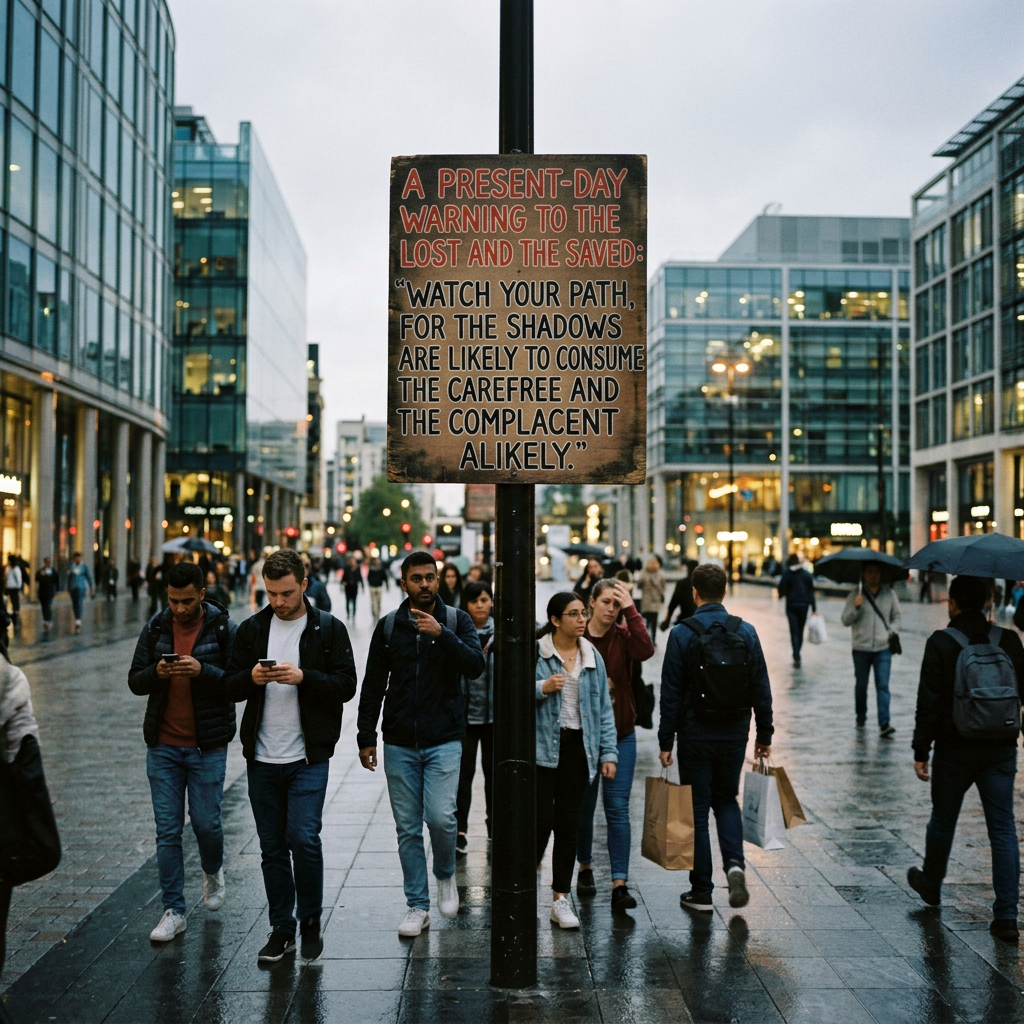
Sometimes all that is necessary is for people to become so distracted, entertained, prideful, materialistic, angry, sexually immoral, self-centered, or spiritually indifferent that they gradually lose their desire for God.
Spiritual destruction can begin quietly.
THE SIN OF PRIDE
Pride occupies a significant place in the biblical understanding of rebellion.
Pride tells mankind:
“I know better than God.”
“I don’t need God.”
“I can determine truth for myself.”
“I will live according to my own desires.”
“I answer to nobody.”
This mentality reflects the same basic pattern of rebellion seen in Genesis.
The temptation is not merely to commit a particular sinful act.
The deeper temptation is to reject God’s authority.
That is why pride is so dangerous.
It can make a person believe that repentance is unnecessary.
MANKIND MUST NOT GIVE SATAN TOO MUCH CREDIT
There is another danger on the opposite side.
Some people become so focused on Satan and fallen angels that they begin attributing nearly everything to demonic activity.
Scripture calls believers to spiritual discernment, not spiritual paranoia.
Not every problem is caused by a demon.
Not every temptation represents a supernatural attack.
Not every disagreement is spiritual warfare.
Human beings possess sinful desires, weaknesses, habits, emotions, and patterns of behavior.
Sometimes the enemy is involved.
Sometimes our own flesh is involved.
Sometimes other people make sinful choices.
Sometimes circumstances are simply difficult.
Biblical discernment requires us to distinguish between these realities rather than blaming everything on the supernatural.
JESUS CHRIST CAME TO DESTROY THE WORKS OF THE DEVIL
The good news of the Gospel is that Satan does not have the final word.
Jesus Christ came into the world to redeem mankind from sin.
First John 3:8 declares that the Son of God was manifested “that he might destroy the works of the devil.”
At the cross, Jesus confronted the consequences of sin.
Through His resurrection, He demonstrated His victory over death.
And through faith in Christ, sinners can receive forgiveness, transformation, and reconciliation with God.
The answer to spiritual darkness is therefore not fear of demons.
The answer is Jesus Christ.
THE ARMOR OF GOD
Paul does not tell believers to become obsessed with Satan.
Instead, he tells them to put on the whole armor of God.
The believer is instructed to stand with:
Truth.
Righteousness.
The Gospel of peace.
Faith.
Salvation.
The Word of God.
Prayer.
This is spiritual preparation.
A believer who knows God’s Word is better equipped to recognize deception.
A believer who lives in repentance is less vulnerable to deliberately embracing sin.
A believer who walks in truth can recognize falsehood.
A believer who remains prayerful can seek God’s direction rather than relying solely upon human understanding.
THE BATTLE BEGINS WITH WHAT WE BELIEVE
Every action begins somewhere.
Before the hand commits the act, the mind has often entertained the thought.
Before a person embraces rebellion, the heart has often accepted a lie.
Before a person walks away from God, there is frequently a gradual process of questioning, rationalizing, compromising, and eventually rejecting biblical truth.
That is why spiritual awareness matters.
Believers must learn to examine what they hear, what they watch, what they consume, what they believe, and what influences their decisions.
First John 4:1 tells believers to “try the spirits” because many false prophets have gone into the world.
Discernment is therefore not optional for the serious follower of Jesus Christ.
OUR CHOICES CAN AFFECT FUTURE GENERATIONS
Sin does not always stop with the person who commits it.
Patterns of anger, addiction, abuse, hatred, deception, unforgiveness, violence, and spiritual rebellion can be passed from one generation to another through behavior, teaching, family patterns, and cultural influence.
This does not mean that a person is spiritually doomed because of the sins of previous generations.
Scripture repeatedly emphasizes individual accountability before God.
But it does mean that our choices matter.
Parents teach their children what is normal.
Families establish patterns.
Communities establish values.
Generations inherit both blessings and consequences from the decisions of those who came before them.
Therefore, breaking destructive patterns through repentance and obedience to God can become a powerful form of spiritual restoration.
THE CALL TO WAKE UP
Humanity does not need another excuse for sin.
Humanity needs repentance.
The Church does not need to become obsessed with darkness.
The Church needs to become deeply rooted in Christ.
Believers must understand spiritual warfare without becoming consumed by it.
We must recognize the existence of spiritual wickedness without blaming every personal failure on demons.
We must understand Satan’s strategies while remembering that Christ is greater.
We must recognize deception while remaining anchored in the truth of God’s Word.
And above all, we must remember that the ultimate battle is not between equal forces.
God is not struggling to determine whether He will ultimately defeat Satan.
The victory belongs to God.
The question is whether we will align ourselves with that victory through faith, repentance, obedience, holiness, and submission to Jesus Christ.
CONCLUSION: CHOOSE WHOM YOU WILL SERVE
The story of mankind is a story of creation, rebellion, deception, sin, judgment, mercy, redemption, and restoration.
Fallen angels played a role in the biblical narrative of spiritual rebellion and deception.
But mankind cannot use their rebellion as an excuse for its own.
Every generation must make its own choice.
Will we believe the lies of darkness, or will we believe the truth of God’s Word?
Will we surrender to sinful desires, or will we submit ourselves to God?
Will we walk according to the ways of this world, or will we pursue holiness?
Will we continue making excuses for sin, or will we repent?
Joshua 24:15 gives humanity a challenge that remains relevant:
“Choose you this day whom ye will serve.”
The spiritual battle is real.
The enemy is real.
Deception is real.
Sin is real.
But the grace of God is real.
The power of the Gospel is real.
The transforming work of the Holy Spirit is real.
And Jesus Christ is Lord.
Therefore, do not become fascinated with darkness.
Turn toward the Light.
Do not spend your life studying the enemy while neglecting the Savior.
Know Jesus Christ.
Do not allow the presence of evil in this world to convince you that evil has won.
It has not.
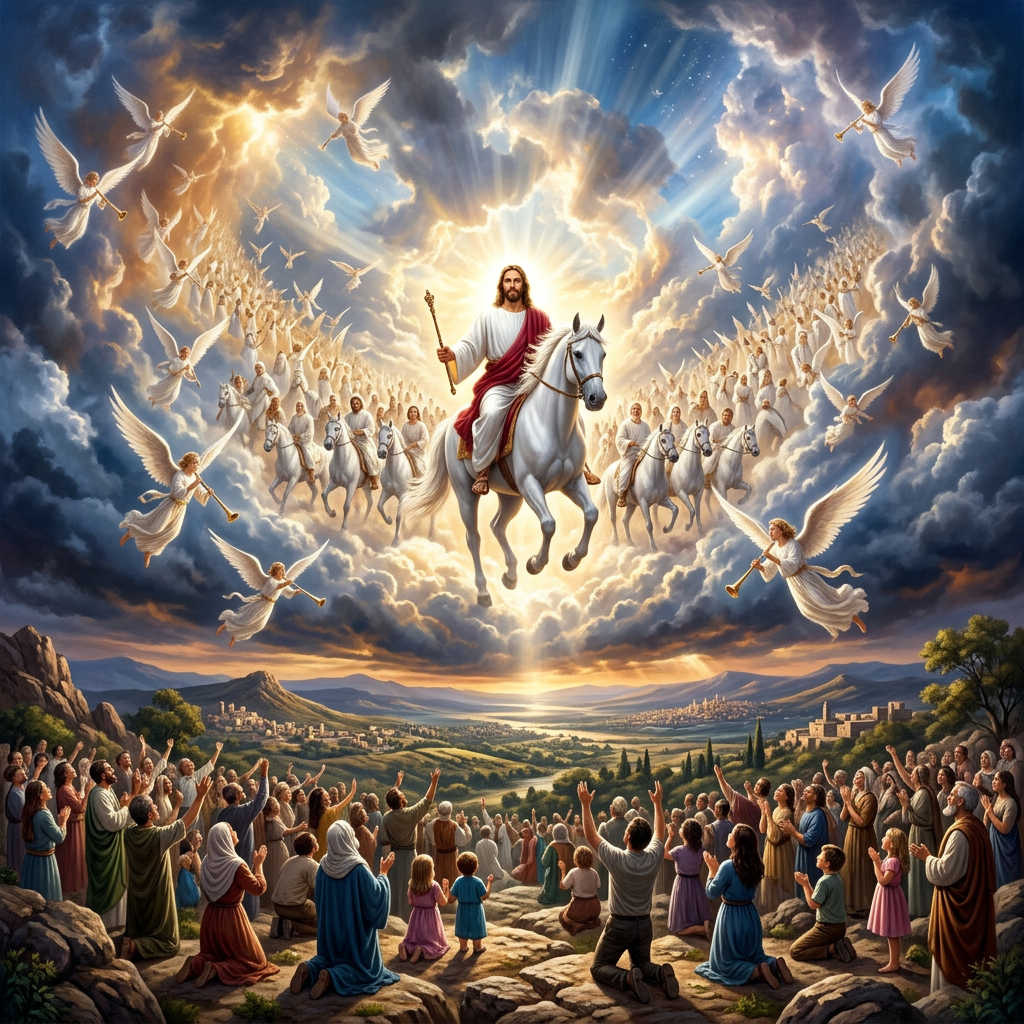
The final victory belongs to God.


Leave a Reply